
What Potting Mix Do Pothos & Monstera Actually Need?
August 10, 2026
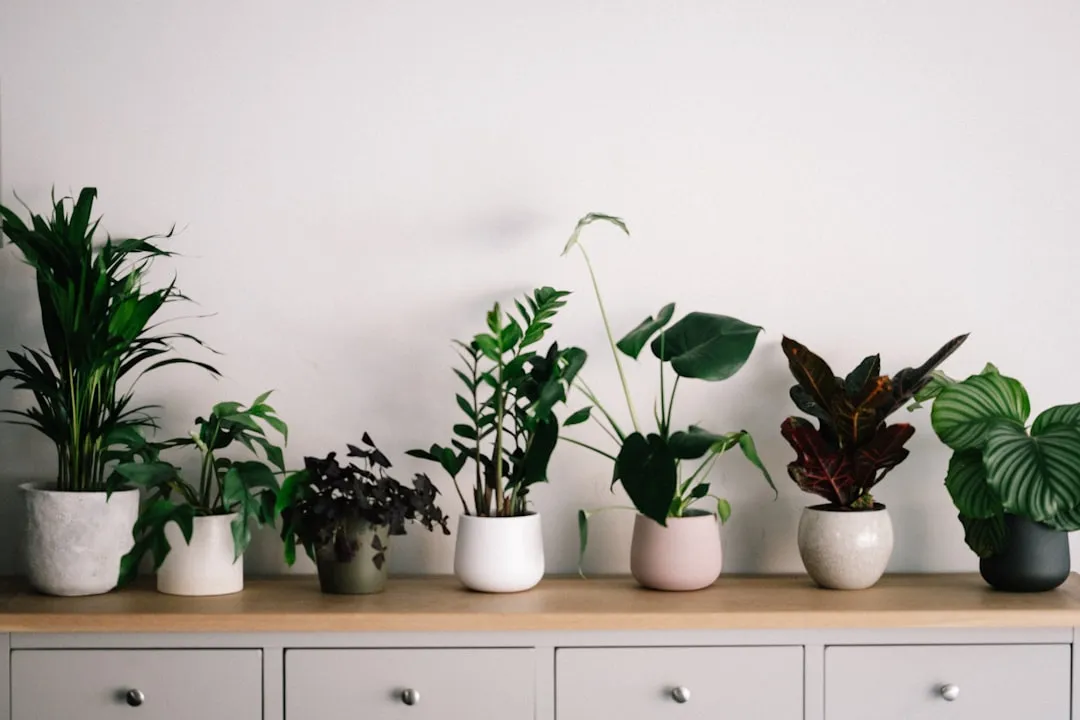
Every repotting guide tells you to use “fresh potting mix” and then moves on, which is not much help standing in the garden center aisle looking at eight bags that all say the same thing. For pothos, monstera, and philodendron specifically, the mix matters more than most people realize — and the fix is cheap and takes about two minutes.
Where these plants actually grow
Monstera deliciosa is a trailing or climbing epiphytic vine that grows high into the rainforest canopy, according to the University of Wisconsin’s horticulture extension. Pothos and philodendron climb the same way.
That’s the whole point. These plants didn’t evolve with their roots buried in dense ground soil — they anchor into bark, moss, and loose leaf litter on the side of a tree. Water pours through that material and drains away in seconds, and there’s air moving around the roots the entire time.
Bagged potting soil out of the bag is much finer and holds water much longer than that. It’ll work, and plenty of pothos survive in it for years. But it’s the reason so many of them sit slightly too wet, slightly too long, all the time.
What a good mix has to do
Three jobs at once:
- Hold some moisture so the plant isn’t bone dry two days after watering.
- Let the rest drain away fast so the roots aren’t sitting in it.
- Keep air pockets open between the particles, because roots need oxygen too.
Standard potting mix does the first job well and the other two only adequately. Everything below is about fixing the last two by making the mix chunkier.
The simple recipe
Measure by volume — a scoop, a cup, whatever’s handy — and mix it in a bucket or tub:
- 2 parts indoor potting mix — the base. Holds moisture and nutrients.
- 1 part orchid bark — the structure. Chunks hold the mix open so it can’t compact into a solid brick.
- 1 part perlite — the air. Those white specks are what keep the mix light and fast-draining.
That’s it. Toss it together dry, then dampen it slightly before potting so it isn’t dusty and water-repellent on the first watering.
If you want to fine-tune it: a handful of horticultural charcoal helps keep the mix sweet in a pot that dries slowly, a little coco coir or sphagnum adds moisture retention if your home runs very dry, and worm castings add gentle, slow nutrition. None of those are required.
If you’d rather buy it ready-made
Plenty of shops now sell this as “aroid mix” or “chunky mix,” and it’s the same idea in a bag. If you’re reading labels instead, you want bark and perlite listed prominently, not just peat.
Two things to steer around:
Moisture-control formulas. They’re built to stay wet longer, which is the opposite of what a climbing aroid wants. They’re great for thirsty patio annuals, not for a pothos on a shelf.
Garden soil or topsoil. Never in a container. It compacts hard, drains poorly in a pot, and can bring pests and weed seeds indoors with it.
Skip the gravel layer at the bottom
This one is worth unlearning, because almost everyone was taught it. A layer of gravel or pebbles in the bottom of a pot does not improve drainage. Illinois Extension is direct about it: it is a myth that a layer of gravel beneath the soil improves container drainage — instead of draining straight through, the water “perches” in the soil just above the gravel.
So you end up with a saturated zone right where the roots are, plus less room for actual soil. What actually moves water out of a pot is a drainage hole and a mix that lets water travel through it — which is exactly why the GrowGrid Owl Planter has a built-in drainage hole, and why a drip tray under it catches the runoff instead of letting the pot stand in it. More on the why in our guide to why plant drainage matters.
Signs your current mix is the problem
- The soil is still damp a week or more after watering, even in a bright spot.
- Water runs down the inside of the pot and straight out the bottom without wetting the middle — usually compacted or dried-out mix.
- The surface has gone hard and crusty, or pulls away from the sides of the pot.
- You keep getting fungus gnats, which breed in soil that stays wet at the surface.
Any of those, and a chunkier mix will do more for the plant than adjusting your watering ever will.
How often to change it
Potting mix breaks down. Bark and peat decompose, particles get finer, and the airy mix you started with slowly turns dense — usually noticeable somewhere around the two-year mark.
Refresh it whenever you repot. If a plant is happy in its current pot and you don’t want to disturb it, scrape off the top inch or two of old mix and top it up with fresh instead. That’s not a full reset, but it buys time.
Does everything on the shelf get the same mix?
Your aroids can share one batch — pothos, monstera, philodendron, and most other climbers want the same thing. Adjust from there:
- Ferns, calathea, and other moisture lovers — go lighter on the bark, heavier on the coir. They don’t want to dry out as completely.
- Succulents and cacti — the opposite direction entirely. They want far more grit and much less organic matter; use a dedicated cactus mix rather than tuning this one.
For everything that climbs, though, the same chunky recipe works, and mixing a batch big enough for the whole shelf takes no longer than mixing one pot’s worth.
Ready to give your plants a better home? Shop the pieces below.
Photo by Annie Spratt on Unsplash.