
How to Get Rid of Fungus Gnats (and Keep Them Gone)
July 12, 2026
You water your plant, and a little cloud of tiny black flies lifts off the soil. Annoying, harmless-looking, and weirdly persistent — those are fungus gnats. The good news: they’re one of the easiest houseplant problems to fix once you understand where they come from, because the cure is really just a change in how you water.
What fungus gnats actually are
Fungus gnats are small, dark, mosquito-shaped flies — usually a few millimeters long — that hang around the surface of your potting soil and drift up when you disturb the plant. The adults you see are mostly a nuisance; they don’t bite you and they don’t do much damage on their own.
The real action happens out of sight. Adults lay their eggs in the top layer of damp soil, and the larvae live in that top inch or two, feeding on fungus, algae, and decaying organic matter in the mix. In small numbers they’re harmless, but a heavy infestation of larvae can start nibbling on tender young roots — which is why it’s worth dealing with rather than ignoring.
Why you have them
Fungus gnats need one thing above all else: consistently moist soil. Their eggs and larvae dry out and die without it. So an infestation is almost always a sign that the top of your soil is staying wet longer than it should — usually from watering a little too often, poor drainage, or both.
This is the same root cause behind most houseplant trouble. Constantly soggy soil invites gnats for the same reason it invites root rot: the surface never gets a chance to dry out. Fix the moisture and you remove the habitat.
Step 1: Let the top of the soil dry out
This is the single most effective thing you can do, and it costs nothing. Let the top inch or two of soil dry out completely between waterings. That dry layer breaks the breeding cycle — eggs and young larvae can’t survive in it — so the population starts collapsing on its own within a couple of weeks.
If your plant likes to stay evenly moist and you’re worried about underwatering it, water from the bottom instead: set the pot in a tray of water for 20–30 minutes and let the soil wick moisture up from below. The roots drink, but the surface stays dry and uninviting to gnats.
While you’re at it, make sure the pot actually drains and empty any saucer or tray that’s holding standing water. A pot sitting in runoff keeps the whole root ball wetter than you think.
Step 2: Trap the adults
Drying the soil handles the next generation, but it won’t catch the adults already flying around laying eggs. Yellow sticky traps are the classic fix — the color attracts the gnats, and they get stuck. Lay a few flat on the soil surface or stand them just above it, and they’ll thin out the visible adults quickly while the soil does its work below.
Traps alone won’t solve the problem — they don’t touch the larvae — but paired with drier soil they speed things up and give you a satisfying tally of how many you’re catching.
Step 3: Treat the larvae if you need to
For a stubborn infestation, you can go after the larvae directly. The most reliable home option is a soil drench containing Bacillus thuringiensis subsp. israelensis (Bti) — a naturally occurring soil bacterium that’s toxic to fly larvae but harmless to your plants, pets, and you. It’s sold to homeowners in products like Mosquito Bits, and it can be applied to the soil to control fungus gnat larvae.
Follow the product’s directions, and expect to repeat it: Bti hits the larvae but not the eggs or adults, so a few applications spaced about a week apart are usually what it takes to clear a cycle. For most mild cases, though, you won’t need this at all — drier soil and a few sticky traps do the job.
Keep them from coming back
Once they’re gone, staying gnat-free is mostly about the same habits that keep any houseplant healthy:
- Water only when the top of the soil is dry. Check with your finger before you reach for the watering can — if it’s still damp an inch down, wait.
- Make sure every pot drains and never let a plant sit in a full saucer.
- Quarantine new plants for a couple of weeks before grouping them with the rest — store-bought soil is the most common way gnats arrive in the first place.
- Clear away fallen leaves and debris from the soil surface, since that’s exactly the decaying matter the larvae feed on.
The takeaway
Fungus gnats look like a pest problem, but they’re really a watering problem wearing a disguise. Let the top of your soil dry out between waterings, trap the stragglers, and treat the larvae only if you have to — and the little black cloud disappears for good. Get your watering rhythm right and they rarely come back.
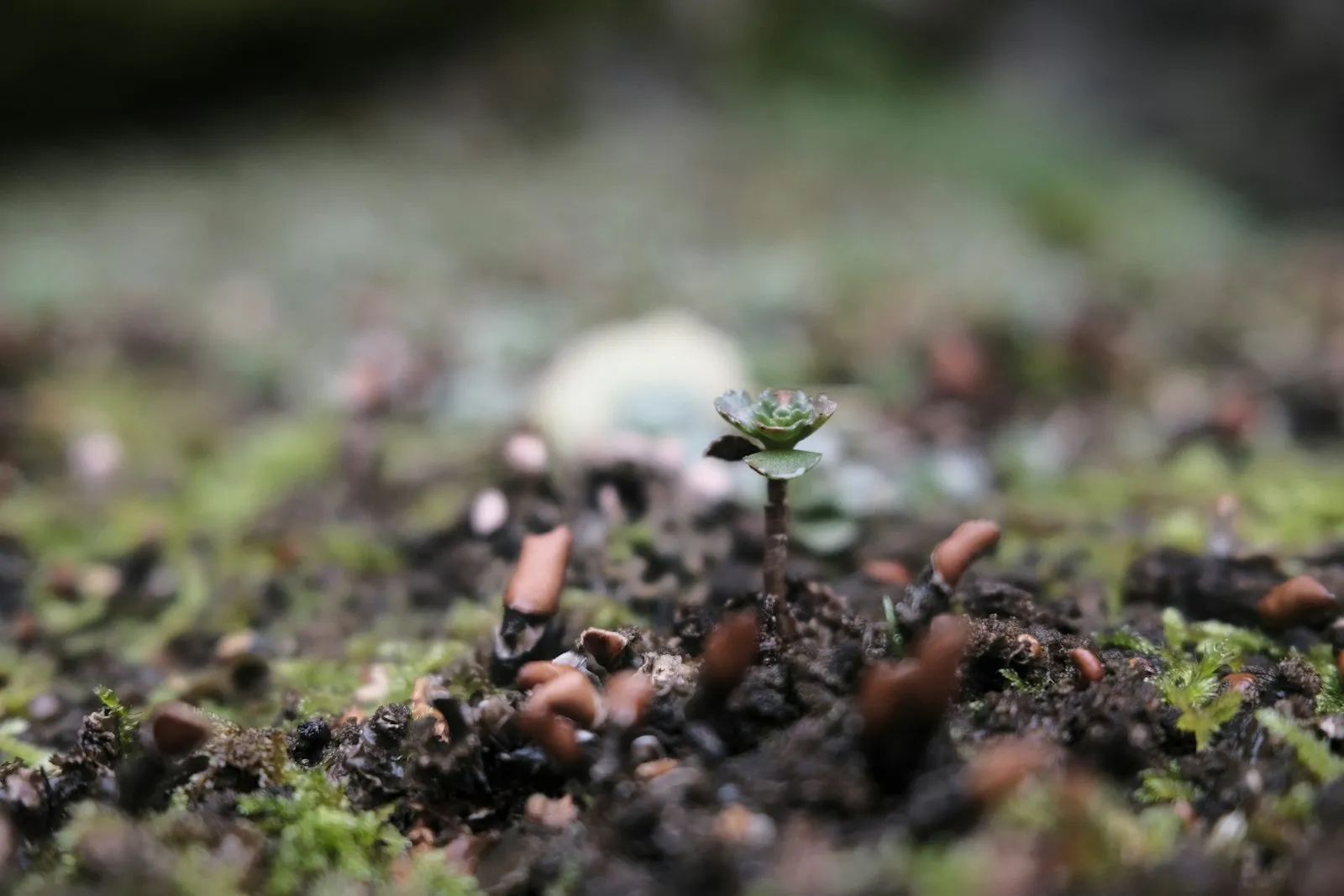
Photo by Magnus Jonasson on Unsplash.