
How to Get Your Holiday Cactus to Bloom This Year
October 26, 2026
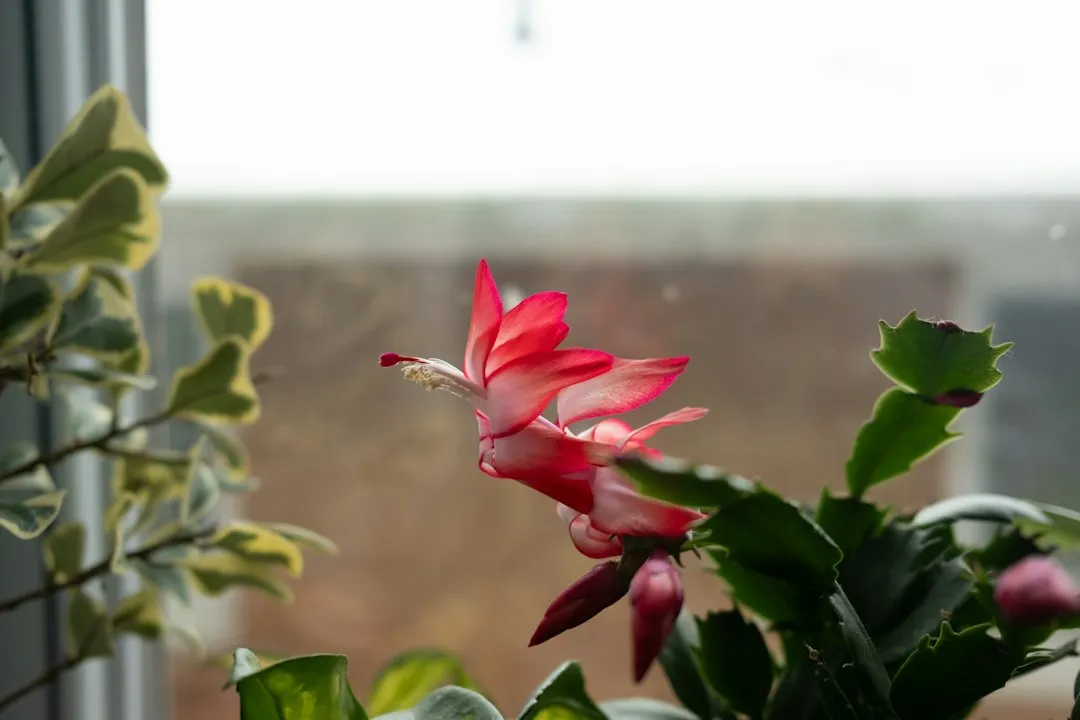
Lots of people have a holiday cactus that flowered beautifully the year they got it and has been nothing but green segments ever since. The plant usually isn’t sick. It just never got the signal to bloom. Holiday cacti flower on a schedule set by the length of the night and the temperature in the room, and once you know that, getting flowers again is mostly about where you keep the plant for the next six weeks.
Late October is the right time to start.
First, figure out which one you have
Two holiday cacti show up in stores this time of year, and from across a room they look almost the same. Look at the edges of the flat green stem segments.
Thanksgiving cactus (Schlumbergera truncata) has pointed, claw-like teeth along the edges of each segment. Its flowers stick out more or less sideways. Christmas cactus has rounded, scalloped edges with no points, and its flowers hang down. NC State Extension’s plant profile lays out the pointed versus rounded margins and the upright versus hanging flowers if you want a closer look.
Telling them apart matters more for timing than for care. A Thanksgiving cactus blooms about a month earlier, so if yours flowers in mid-November, it isn’t confused. It’s exactly on time.
It’s not a desert cactus
The name throws people off. Holiday cacti are true cacti, but they don’t come from the desert. They grow in the rainforests of southeastern Brazil, on tree branches and rocks in the coastal mountains, according to NC State Extension.
That changes how you care for one. A holiday cactus wants bright but filtered light rather than blazing sun, more water than a typical cactus, and a pot that drains freely. Treat it like a desert plant and it shrivels. Treat it like a fern sitting in a wet saucer and the roots rot.
Why it isn’t blooming: long nights and cool rooms
Holiday cacti are short-day plants. They set flower buds when the nights get long, and cool temperatures help them along. The University of Minnesota Extension gives specific numbers, which are useful here:
- At night temperatures around 55°F, the plants will bloom in approximately 5 to 6 weeks, sometimes regardless of the day length.
- At 60 to 65°F, they need at least 12 hours of complete darkness every night for about six weeks.
- Above 65°F at night, they’re unlikely to bloom at all.
That last point explains most of the stubborn plants. A warm living room with the lamps on until midnight is a long-day, warm-night room as far as the plant can tell. It will grow, but it won’t flower.
How to set it up for flowers
You have two ways to give it what it needs. Either one works.
Option 1: find a cool room. A spare bedroom, a cool entryway, or a spot near (not against) a cold window gets you into that 55–60°F night range. At those temperatures, day length matters a lot less. This is the easiest route if your home has a chilly corner.
Option 2: give it real darkness. If every room in your home is warm, control the light instead. Give the plant 12 or more hours of uninterrupted darkness each night for about six weeks. Put it in a room nobody uses after sunset, or move it into a closet in the evening and back to its bright spot in the morning.
“Uninterrupted” is the part that trips people up. A lamp switched on for an hour in the evening, or a bright streetlight through the window, can be enough to break the night. If you go with the closet routine, be consistent about it.
Either way, the plant still needs bright, indirect light during the day. Darkness at night doesn’t mean darkness all the time.
Water and feeding in the fall
Let the top of the soil dry out between waterings, then water thoroughly and let it drain. Never leave the pot sitting in water. UMN notes that root rot is one of the most common causes of death for these plants, and that excess water can also make them drop their flower buds. A pot with real drainage holes does most of the work here. Drainage matters just as much for a holiday cactus as for any tropical plant.
On fertilizer, ease off. Feeding is for the spring and summer growing season. Pushing growth in the fall won’t get you more flowers. If you want to keep feeding, UMN suggests switching to a low-nitrogen formula at half strength while buds are forming. Our guide to fertilizing houseplants covers how to read those numbers on the label.
Once you see buds, leave it alone
When small pink or red tips start showing at the ends of the segments, the hard part is done. Now the job is to not mess it up.
Holiday cacti are known for dropping buds when something changes suddenly: a cold draft, a heating vent, a big swing in temperature, even being turned so the light hits from a different side. If you want the plant to bloom in a warmer, more visible spot (on the dining table for the holiday, say), move it as soon as the buds first appear and then leave it there.
Some bud drop is normal. A plant will sometimes set more buds than it can carry and shed a few. If most of them fall, look for a draft or a heat source.
After it blooms
Once the flowers fade, the plant takes a short rest. Water a little less often for a while, then go back to normal watering when new growth picks up in spring.
This is also a good time to shape it. Cut or twist off a stem where two segments meet, and the plant will usually branch from that spot. A fuller plant means more segment tips, and more tips means more places for flowers next year. Those trimmings root easily, so a few segments pushed into a small pot of well-draining mix will turn into new plants to keep or give away. The idea is the same as propagating pothos, just slower.
Don’t rush to repot. Holiday cacti bloom best when they’re a bit pot-bound, and a healthy one may only need a bigger pot every three years or so.
They can outlive you
Treat it right and a holiday cactus can be with you for a very long time. UMN notes these plants can live over 100 years and are often passed down through families. Six weeks of long nights each fall is a small price for a plant that might end up with your grandkids.
Photo by Cameron Arksey on Unsplash.