
Pothos vs. Philodendron: How to Tell Them Apart
July 30, 2026
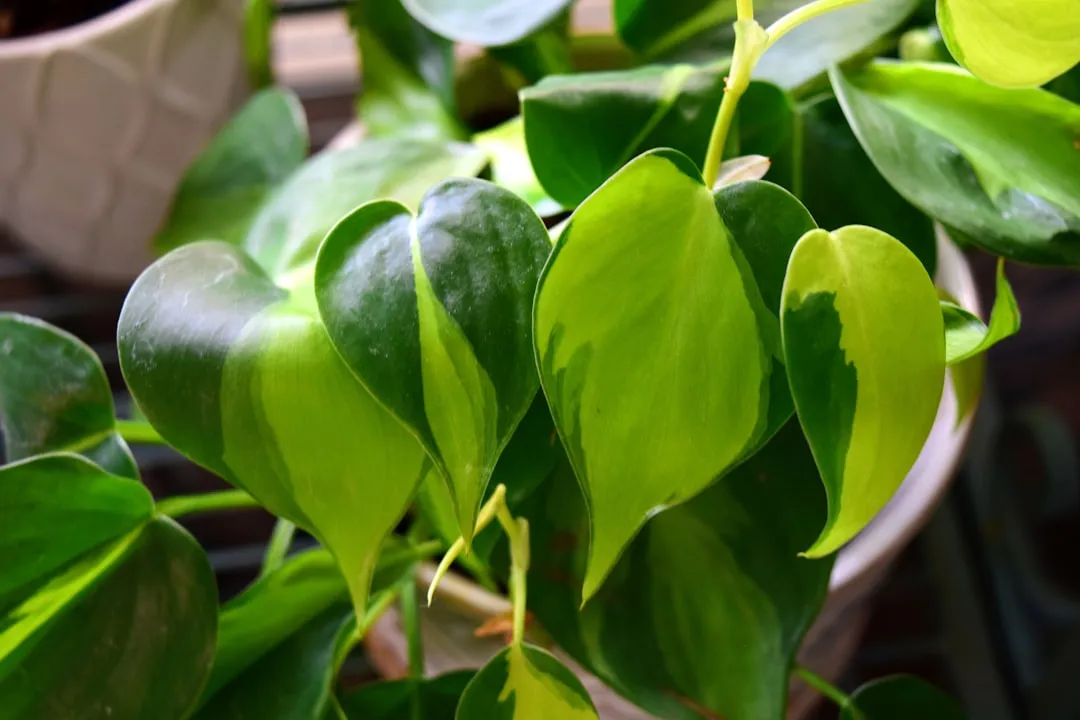
Two green vines, heart-shaped leaves, trailing over the side of the pot, sitting side by side at the garden center with hand-written tags that may or may not be right. Plenty of plant people have owned one for years while calling it the other. Here’s how to actually tell — starting with the single easiest thing to look at.
Same family, different plants
Pothos and heartleaf philodendron are both aroids — members of the arum family — which is why they look so similar and want such similar care. But they’re separate genera, roughly as related to each other as they are to a Monstera.
The one you’re most likely to own is Epipremnum aureum, the golden pothos, which is native to the Society Islands in the South Pacific. The lookalike is Philodendron hederaceum — the species name means “ivy-like,” a nod to the way it climbs. So no, you’re not bad at plants. They really are easy to confuse.
Check the new growth first
This is the tell that takes two seconds and almost never fails.
Find the newest leaf on the vine, the one still furled up. On a philodendron, that leaf comes out wrapped in its own thin, papery sheath — often pinkish or pale brown. Once the leaf unfurls, the sheath dries up, browns, and eventually drops off, leaving little crispy scraps around the stem. Botanists call these stipules, and their presence on new growth is one of the formal ways to separate the two plants.
A pothos does none of that. Its new leaf simply unrolls out of the base of the previous leaf’s stalk — no wrapper, no papery litter. If you’re finding dried brown tissue shedding along the vine, you have a philodendron.
Then look at the leaf itself
Once you know what you’re looking for, the leaves stop looking identical.
- Pothos leaves are thicker and stiffer, with a waxy, high-gloss surface and a slightly uneven, almost puckered texture. Variegation, when it’s there, tends to be irregular splashes of gold or cream.
- Philodendron leaves are thinner and softer, with a smoother, more matte or satiny finish. The heart shape is more pronounced — a deeper notch at the top and a longer, more drawn-out point at the tip.
- New philodendron leaves are often bronze or reddish as they harden off, then settle into green. New pothos leaves come in green from the start, just a lighter shade.
Color helps too. A philodendron’s green usually reads a little deeper and cooler; a pothos leans warmer and brighter, especially in a variegated cultivar.
The petiole test
If you want to be certain, feel the petiole — the little stalk connecting the leaf to the vine.
Run your finger along the top of it. A pothos petiole is grooved: there’s a distinct channel or indent running its length. A philodendron’s is round and smooth all the way along. This is one of the actual diagnostic features botanists use, and once you’ve felt the difference on one plant you’ll never need the other tests again.
Does it change how you care for them?
Mostly, no — which is the good news if you’ve been treating them the same for years. Both want bright, indirect light, both climb, both root readily at the node, and both hate sitting in soggy soil. Our guide to how much light pothos and monstera actually need applies just as well to a philodendron.
Three differences worth knowing:
- Philodendron handles low light better. Neither will thrive in a dark corner, but a heartleaf philodendron tolerates a dim spot longer before it starts stretching. A pothos in the same corner goes leggy faster.
- Pothos wants to dry out more between waterings. Its thicker leaves hold more water, so it forgives a missed week more easily. Philodendron prefers soil that stays lightly moist.
- Pothos gets bigger. As a houseplant, heartleaf philodendron tops out around 13 feet of vine, while pothos can run to 40. Worth knowing before you plan a shelf around one.
Both are toxic to pets
This one is the same for both, and it’s worth stating plainly: pothos and philodendron are both listed by the ASPCA as toxic to cats and dogs — pothos here and heartleaf philodendron here. Chewing the leaves causes mouth and throat irritation. Neither is usually a serious emergency, but if you have a determined chewer in the house, hang them high or pick a different plant. Correctly identifying which one you own doesn’t get you out of this — they’re the same answer.
Whichever one you have, let it climb
Here’s the thing both plants share that most people never take advantage of: they’re climbers, not hangers. Left to trail, either one will run in a single long line and put out small juvenile leaves forever. Given something to grip, both grow upward in a fuller, more compact shape — and pothos in particular starts producing noticeably larger leaves once it’s climbing with decent light.
A trellis behind the pot is the easiest place to start; the honeycomb openings give short new stems somewhere to tuck in from the moment they appear. If your plant is throwing aerial roots — the thick cords pushing out of the stem — a moss pole is the better choice, because those roots can actually grab into damp moss and feed the plant as it climbs.
Either way, the vine you’ve been letting dangle has more in it than you think.
Ready to give yours something to climb? Shop the pieces below.
Photo by Rebecca Matthews on Unsplash.