
How to Style Vining Houseplants: Trail, Climb, or Both
September 28, 2026
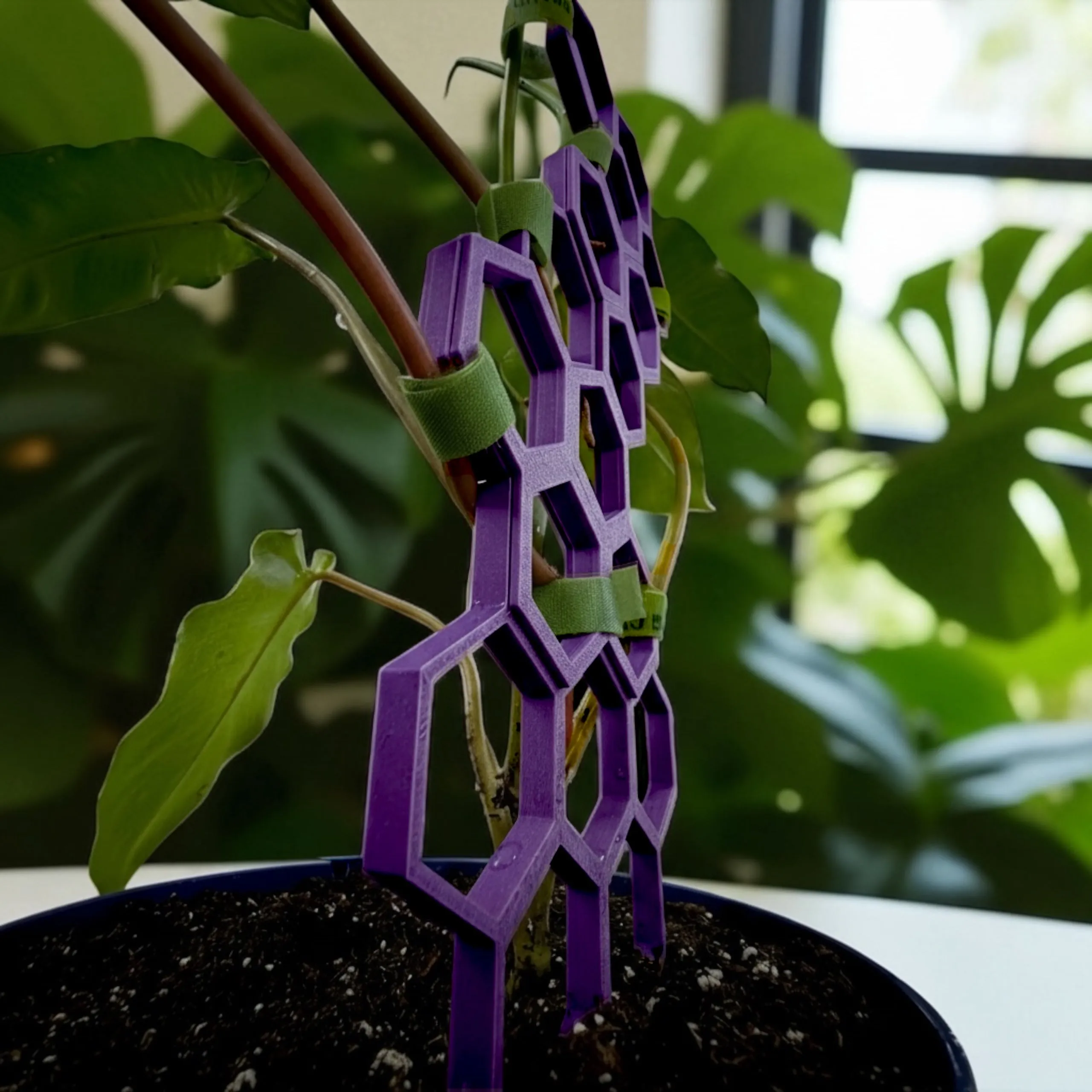
A vining plant is the most flexible thing you can put on a shelf. One pothos can pour off the top of a bookcase, climb a trellis on a side table, or do a bit of both. The shape it takes is mostly up to you. Most people never make that choice on purpose, though. The plant just grows wherever it wants, and a year later it’s a tangle.
Here’s how to decide what each vine should look like, and how to make it look deliberate.
Decide the shape before the spot
Before you move a plant anywhere, ask one question: do you want this plant to read as a line going down, or a shape going up?
- Trailing gives you a soft vertical line that falls from whatever the plant sits on. It works best up high: top shelves, the tops of cabinets, a hanging planter, the edge of a tall dresser.
- Climbing gives you a compact, upright shape. It works best at eye level or below: side tables, desks, windowsills, and floor pots next to a chair.
The mistake is putting a trailing plant somewhere low, like a coffee table or a nightstand. There, the vines have nowhere to fall except across the surface and onto the floor. If a plant lives low, train it up.
Making a trailing plant look full
A trailer only looks good if the top of the pot looks good too. A few bare stems hanging from a sparse crown read as neglect, not as a cascade.
- Let the vines be different lengths. A curtain of vines all cut to the same length looks trimmed. Staggered lengths look natural.
- Trim a few vines back each year so fresh growth fills in the crown. Our guide to fixing a leggy pothos covers exactly where to cut.
- Rotate the pot a quarter turn every week or two. Otherwise the side facing the window fills out and the side facing the wall thins.
Making a climbing plant look intentional
When a vine climbs, the support is the shape. A tall, narrow trellis makes a tall, narrow plant. A wide one makes a fan. So pick the silhouette you want first, then build the support to match.
With a modular honeycomb trellis, you’re not stuck with whatever shape came in the box:
- Tall column: stack the panels straight up from the foundation panel. This is good for a narrow spot beside a window frame or a bookshelf.
- Wide fan: branch panels out to the sides. This is good on a console table or a sill, where there’s more width than height to fill.
- L-shape or wrap: a 90° corner connector turns the trellis around a corner, or all the way around the pot, so the plant has support on every side and looks full from any angle.
Guide new stems through the hex openings as they grow, instead of letting them wander and fixing them later. A plant that’s trained a little every week looks neat. One that gets wrangled every few months looks wrangled.
Or do both
Some of the best-looking vining plants are a mix. Train most of the stems up a trellis, then let two or three vines spill over the front of the pot. You get height and structure from the climbing part and a bit of softness from the trailing part. It’s an easy look to pull off on a shelf with some clearance above it.
Group plants that contrast
One vining plant is a plant. Three together start to look like a styled corner. Designers have a few rules of thumb that work well with houseplants:
- Group in odd numbers. Three plants usually look more relaxed than two or four.
- Vary the heights. Put a climber on a trellis, a mid-height plant, and a trailer spilling off a shelf edge. Your eye moves across the group instead of skipping over it.
- Contrast the leaves. A dark green heartleaf philodendron next to a bright, pale pothos next to a split-leaf monstera reads as three different plants. Three pothos of the same color often blur into one green blob.
Let the support match the room
Your support is part of the look, so pick its color on purpose:
- Classic Black reads as a graphic line, like a picture frame for the leaves. It suits modern rooms and white walls.
- Sage blends into the foliage, so the plant gets the attention and the trellis almost disappears.
- Terracotta picks up the warmth of clay pots and wood furniture.
- Rich Plum is the contrast pick. It’s bold against green leaves and fun in a room that can handle a little color.
If you have several supported plants in one space, repeating a single color ties the group together. Mixing two colors can look intentional too, as long as you repeat each one at least twice.
Protect the furniture
A styled plant on a wooden dresser can leave a water ring the first time you water it. Put a drip tray under any pot with a drainage hole. A tray with a deep rim catches the runoff before it reaches the finish. It also gives you a clean base under the pot, which makes the whole arrangement look finished instead of temporary. Just empty any standing water after watering so the pot isn’t sitting in it.
Style for the light, not against it
The one rule that beats every styling rule: the spot has to work for the plant. A pothos styled beautifully in a dark hallway will go leggy within months, and all that careful training will turn into long bare stems. Put your styled plants where they get bright, indirect light, and save the dimmer spots for the hardiest plants you have. If you’re not sure what counts as bright enough, our guide to how much light pothos and monstera need walks through it.
Get the light right, choose a shape, and train the vines a little every week. Your plant will look like you meant it.
Ready to give your vines a shape? Shop the pieces below.