
Are Pothos & Monstera Toxic to Cats and Dogs?
August 3, 2026
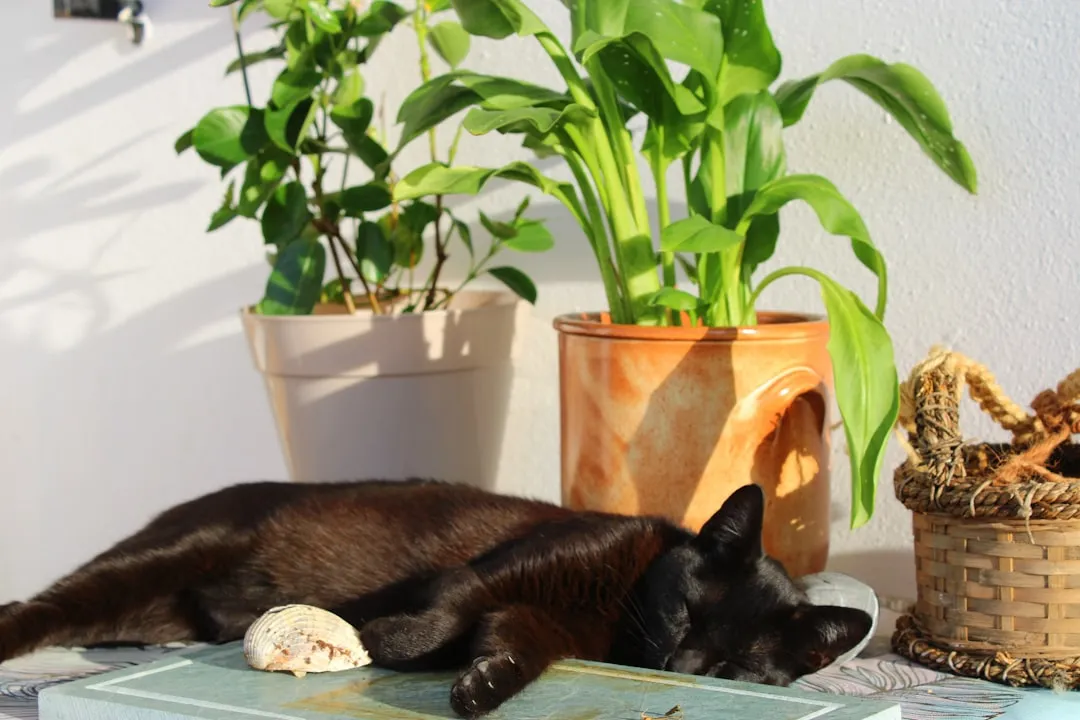
If you own a cat or a dog and a pothos, you’ve probably had the moment: you catch them nosing at a low-hanging vine and think, wait — is that going to hurt them? It’s a fair question, and the answer is more nuanced than the scary lists make it sound. Here’s what’s actually going on, and what you can do about it without giving up the plant.
The short answer
Yes — pothos, monstera, and philodendron are all listed as toxic to cats and dogs. The ASPCA lists pothos (devil’s ivy) as toxic to dogs, cats, and horses, and the same goes for monstera and heartleaf philodendron.
They’re all toxic for the same reason, which is why they land in the same bucket. Every one of them contains insoluble calcium oxalates — microscopic needle-shaped crystals in the leaves and stems. A pet that bites into a leaf gets a mouthful of them, and they cause immediate irritation.
What that actually looks like
The important thing about calcium oxalate is that it hurts right away. The ASPCA lists the signs as oral irritation, pain and swelling of the mouth, tongue and lips, excessive drooling, vomiting, and difficulty swallowing.
That immediacy is also, in practice, a limit on the damage. A cat that bites a pothos leaf usually doesn’t go back for a second bite — the burning sensation stops most animals from eating enough to cause a serious poisoning. This is a very different category of risk from a plant that a pet can happily eat a lot of before anything goes wrong.
None of which makes it fine. A drooling, distressed animal with a swollen mouth is a genuinely bad afternoon, and swelling that affects swallowing or breathing is an emergency. If you think your pet has chewed on a plant, call your vet — or the ASPCA Animal Poison Control Center at (888) 426-4435. Don’t wait to see how it develops, and don’t try to treat it at home.
The one that’s genuinely dangerous
While we’re here: if you have a cat, the plant to actually be afraid of isn’t your pothos. It’s lilies.
True lilies and daylilies are in a different league entirely. The FDA’s guidance on lilies and cats is blunt about it: a small amount of leaf or petal, a few grains of pollen licked off their fur, or even the water from the vase can cause fatal kidney failure within days. The FDA’s recommendation is simply not to bring them into a home with a cat.
So the practical hierarchy is: pothos and monstera are a manageable household risk you can design around. Lilies and a cat are not a combination to manage. That’s worth knowing before someone sends you a bouquet.
How to keep the plant and the pet
The good news is that the thing that makes a pothos risky — long vines dangling at nose height — is also the thing you were probably already thinking about fixing.
Grow up, not out. A vine trailing off a shelf hangs down into exactly the space a curious cat swats at. The same plant trained onto a trellis or a moss pole holds itself upright in a compact column, with the growing tips well above floor level and nothing swinging loose. It’s the single most effective change you can make, and it makes the plant look better too.
Put height between them. High shelves, wall hooks, and hanging planters all work — but only if the vines don’t grow back down into reach. Height plus vertical support is the combination that actually holds up over months.
Trim the tempting bits. If one vine has run long and low, cut it back just above a node. You’ll get branching and a fuller plant out of it, and the cutting roots easily. Our guide to pruning a leggy pothos covers exactly where to cut.
Watch the soil, too. Some dogs are more interested in digging than chewing. A pot they can’t easily tip, and soil that isn’t kept soggy, removes most of that appeal — and dry-ish topsoil helps with fungus gnats at the same time.
Give them their own plant. A pot of cat grass is a surprisingly effective decoy. A lot of plant-chewing is boredom looking for a target.
Plants that are actually safe
If you want a room where you don’t have to think about it at all, there are real options — all four of these are listed by the ASPCA as non-toxic to both cats and dogs:
- Spider plant (Chlorophytum comosum) — trailing, tough, and it makes free babies
- Boston fern (Nephrolepis exaltata) — lush and full, loves the humidity of a bathroom
- Parlor palm (Chamaedorea elegans) — a proper floor plant that tolerates low light
- Prayer plant (Calathea) — patterned leaves that fold up at night
One caveat worth keeping in mind: the ASPCA notes that consumption of any plant material may cause vomiting. “Non-toxic” means it won’t poison your pet, not that it’s food. A cat that eats an entire spider plant is still going to be sick on your rug.
Before you buy anything new, it’s worth a thirty-second check against the ASPCA’s searchable plant list — it covers over a thousand plants and you can look them up by common or scientific name.
What about the pot and the support?
Worth mentioning since it comes up: every GrowGrid piece is made from plant-based PLA, which is safe for indoor use around plants, people, and pets. Nothing leaches into the soil and there’s nothing on the pole or the panels a curious animal can get into.
The real safety feature is just the shape of the thing. A plant growing vertically stays where you put it — and a plant that stays where you put it is one that neither of you has to negotiate over.
Ready to get your vines growing up and out of reach? Shop the pieces below.
Photo by Inna Yatsun on Unsplash.