
Why Isn't My Monstera Splitting? (Fenestration Explained)
July 11, 2026
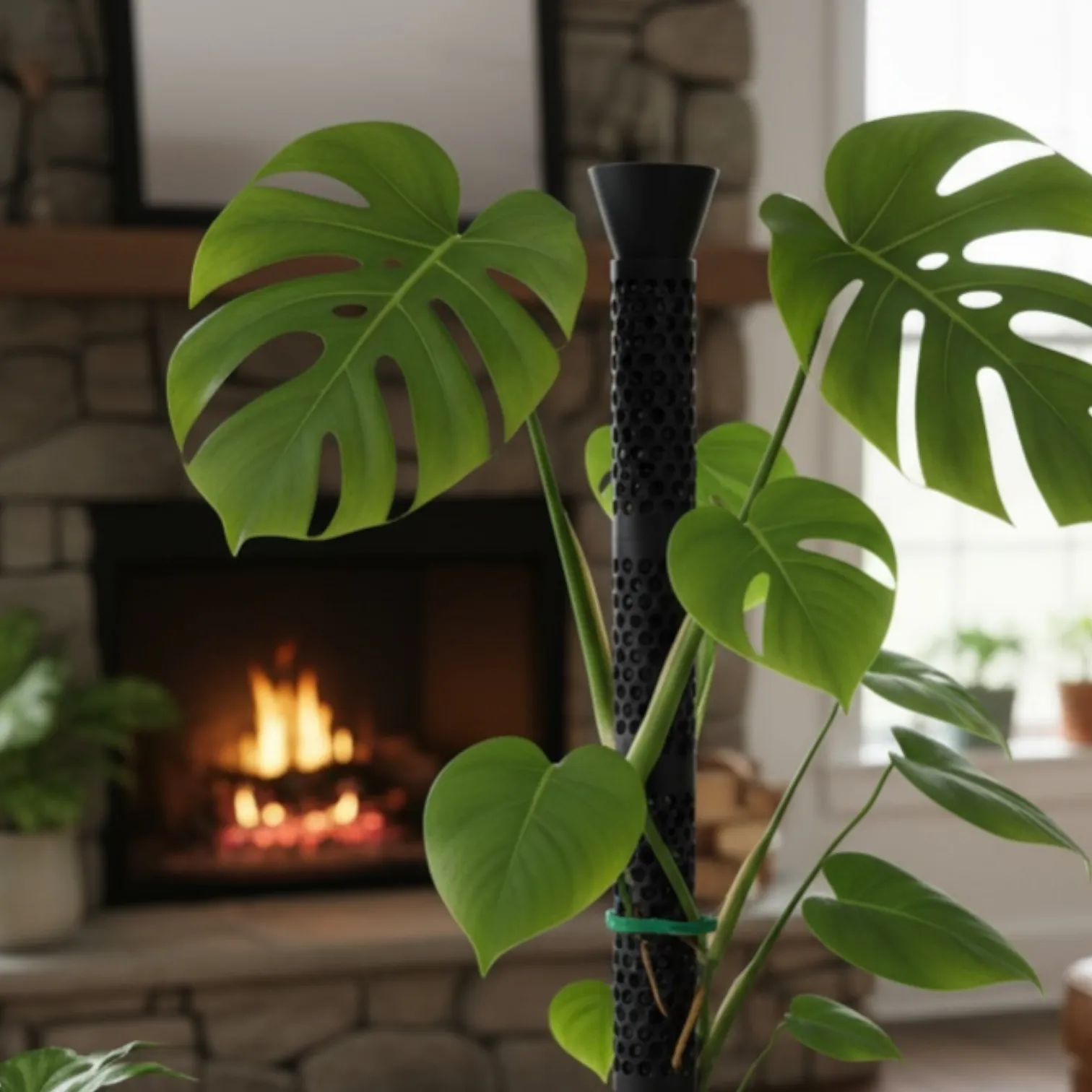
Those dramatic holes and splits are the whole reason people fall for a Monstera in the first place. So it’s a little deflating when your plant keeps pushing out plain, solid, heart-shaped leaves instead. The good news: nothing is wrong. Splitting is a stage, not a switch — and there are a few things you can do to bring it on sooner.
What fenestration actually is
Fenestration is the botanical word for the natural holes and splits in a leaf. It comes from fenestra, Latin for “window” — which is a pretty good description of what those openings look like once a leaf fully develops.
Here’s the part that trips people up: an individual leaf doesn’t split later. Each leaf emerges either fenestrated or not, based on the plant’s condition at the time it forms. So a solid leaf you already have won’t develop holes down the road — fenestration shows up in the new leaves a maturing, well-kept plant produces. That’s why this is really a story about encouraging good new growth, not fixing old leaves.
Why Monstera leaves split in the first place
In the wild, Monstera deliciosa climbs up tree trunks toward the canopy, and its leaves get enormous. Botanists have a few leading theories for why those big leaves evolved holes — and they’re worth knowing, because they hint at what the plant “wants”:
- Letting light through. Holes may let sunlight pass to the plant’s own lower leaves instead of shading them out.
- Standing up to weather. A split, perforated leaf lets wind and heavy rain pass through rather than catching it like a sail.
- More reach for less leaf. Spreading a leaf wider with gaps covers more area to catch dappled light, without the plant spending energy filling in every inch.
You don’t need to settle the debate — the takeaway is that fenestration is tied to a mature plant reaching upward toward good light. Recreate a bit of that indoors and the leaves follow.
Why yours might not be splitting yet
If your Monstera is all solid leaves, it’s almost always one of these:
- It’s still young. This is the most common reason by far. Juvenile Monsteras naturally produce small, solid, heart-shaped leaves for a while. Splitting comes with age, and there’s no rushing a plant that simply hasn’t matured yet.
- Not enough light. Fenestration is strongly linked to light. A Monstera limping along in a dim corner will survive, but it rarely has the energy to produce big, split leaves.
- Nothing to climb. Monstera is a climber by nature, and it tends to produce larger, more fenestrated leaves when it has something to grip and grow up — the same instinct that sends it up trees in the wild.
- General stress. Inconsistent watering, cramped roots, or a rough stretch can push a plant into survival mode, where fancy new leaves aren’t the priority.
How to encourage bigger, more fenestrated leaves
None of the fixes are complicated — they just take a little patience:
- Give it bright, indirect light. This is the biggest lever. A spot with plenty of bright, open daylight (without hours of harsh direct sun on the leaves) gives the plant the fuel to push out mature growth.
- Let it climb. Add a moss pole or a trellis and gently guide the stems upward. Vertical support encourages the mature, upward growth habit that comes with larger, more fenestrated leaves — rather than a plant that just trails and stays juvenile.
- Keep care steady. Water when the top inch or two of soil dries out, don’t let it sit in soggy soil, and feed it lightly during the growing season. Consistency beats fussing.
- Be patient. Once a plant is mature, well-lit, and climbing, splitting tends to arrive on its own — often more dramatically with each new leaf. Watch the newest growth, not the old.
A quick note on Pothos
If you’re waiting for your Pothos to split like a Monstera, you’ll probably be waiting a while. Pothos can develop larger, fenestrated leaves in the wild once it matures and climbs high, but as an indoor houseplant it almost always stays in its solid, heart-shaped juvenile form. That’s completely normal — a Pothos on a trellis still grows fuller and healthier; it just isn’t going to turn into a Monstera. For reliable splitting, Monstera is your plant.
Give your Monstera good light, something to climb, and a little time, and the windows will come. Ready to give it something to climb? Shop the pieces below.