
How to Build a Closed Terrarium: A Beginner's Guide
July 18, 2026
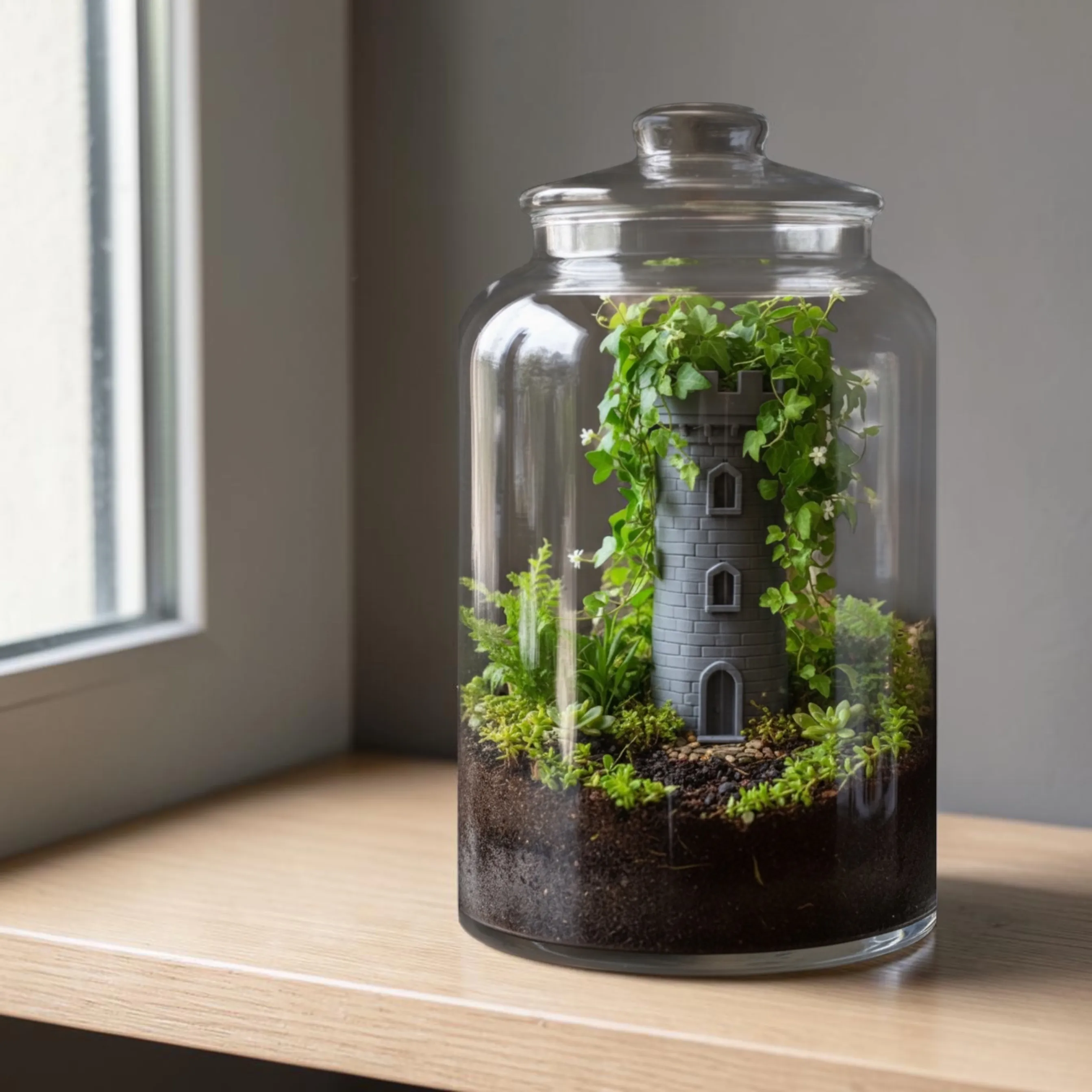
A closed terrarium is one of the most forgiving projects in the houseplant world. Seal a little jungle inside a glass jar and it quietly waters itself, sometimes for months at a time. It’s part science experiment, part tiny world you get to design. Here’s how to build one from scratch.
What a closed terrarium actually is
A closed terrarium is a sealed glass container that runs its own miniature water cycle. Moisture evaporates from the soil and the leaves, condenses on the cool glass, and rolls back down to water the plants again — that self-watering loop is the whole point of lidding it. Once it’s balanced, you barely have to touch it.
The idea isn’t new. Terrariums were discovered by accident in 1833, when Nathaniel Ward sealed a cocoon in a glass jar to study insects and noticed the ferns inside thriving. Those “Wardian cases” became the terrariums we know today.
Choose your container
Almost any clear glass vessel works — a wide apothecary jar, a fishbowl, a cookie jar with a lid, even a large mason jar. Two things matter:
- It should be clear glass, not colored or frosted, so light reaches the plants.
- The opening should be wide enough to get your hand (or a spoon) inside. A narrow neck looks charming but makes planting and cleanup genuinely frustrating.
For a closed terrarium you want a lid or stopper. If your container doesn’t have one, a piece of glass or even plastic wrap on top will do — you can always leave it cracked open while you dial in the moisture.
Pick plants that love humidity
A sealed jar stays warm and damp, so choose plants that would be thrilled by that. Small tropicals and forest-floor species are ideal:
- Ferns (button fern, maidenhair) — the original terrarium plant
- Fittonia (nerve plant) — bright veins, stays small
- Moss — the easiest way to carpet the floor in green
- Baby tears, creeping fig, or small ivy for trailing texture
- A small Pothos cutting if you want a fast, hardy grower
Avoid succulents and cacti in a closed terrarium — they want dry air and will rot in the humidity. Save those for an open, uncovered dish instead.
Build it layer by layer
Work from the bottom up:
- Drainage layer. Start with an inch or so of pebbles or small stones so excess water has somewhere to collect below the roots, away from the soil.
- A thin layer of activated charcoal. This helps keep the closed, damp environment fresh and cuts down on any musty smell.
- Potting mix. Add a couple of inches of soil — enough to bury the largest root ball you’re planting. A standard houseplant mix is fine.
- Plant from largest to smallest. Nestle your biggest plant in first, then tuck smaller ones and moss around it. Leave a little breathing room; everything will fill in.
- Finish with moss, stones, or bark to cover bare soil and make it feel like a real forest floor.
Add a focal point
This is where a terrarium goes from “plants in a jar” to a scene you actually want to look at. A single accent piece gives the eye somewhere to land.
The GrowGrid Miniature Terrarium Accents are made for exactly this. The Castle Tower is hollow with a 2-inch opening at the top, so you can pack it with moss and soil and let a small plant grow right out of the battlements — it becomes part of the planting, not just a decoration. The Pagoda and the Hillside Door are decorative accents: nestle the pagoda into the moss as a centerpiece, or press the little round door into a mounded hillside for a storybook, tucked-into-the-hill look. All three are printed in plant-based PLA that’s safe for a humid, enclosed setup.
Place it and (barely) care for it
Set your terrarium in bright, indirect light — never direct sun, which turns a sealed jar into an oven and cooks the plants. A spot near a window that gets plenty of light but no harsh midday beam is perfect.
Then mostly leave it alone. After sealing it, watch the glass:
- Light fog that clears each day is exactly right. That’s your water cycle working.
- Heavy, constant condensation you can’t see through means it’s too wet — take the lid off for a day or two to let some moisture escape.
- No condensation at all and dry soil means it’s too dry — add a small splash of water and re-seal.
Once it settles into balance, a closed terrarium can go weeks or months between waterings. Prune anything that outgrows the space or presses against the glass, wipe the inside clean if it fogs up permanently, and otherwise just enjoy watching your tiny world do its thing.
Ready to build a little world of your own? Shop the pieces below.